LEV
Local Exhaust Ventilation- LEV System
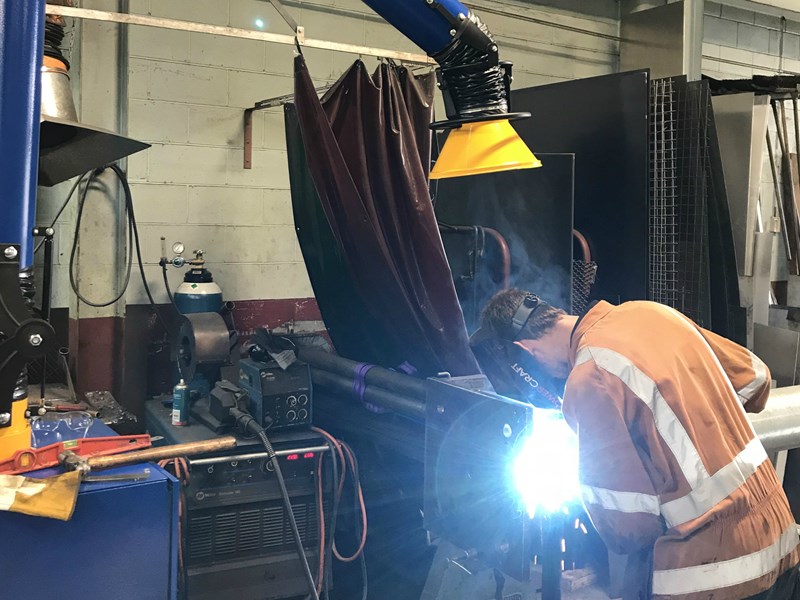
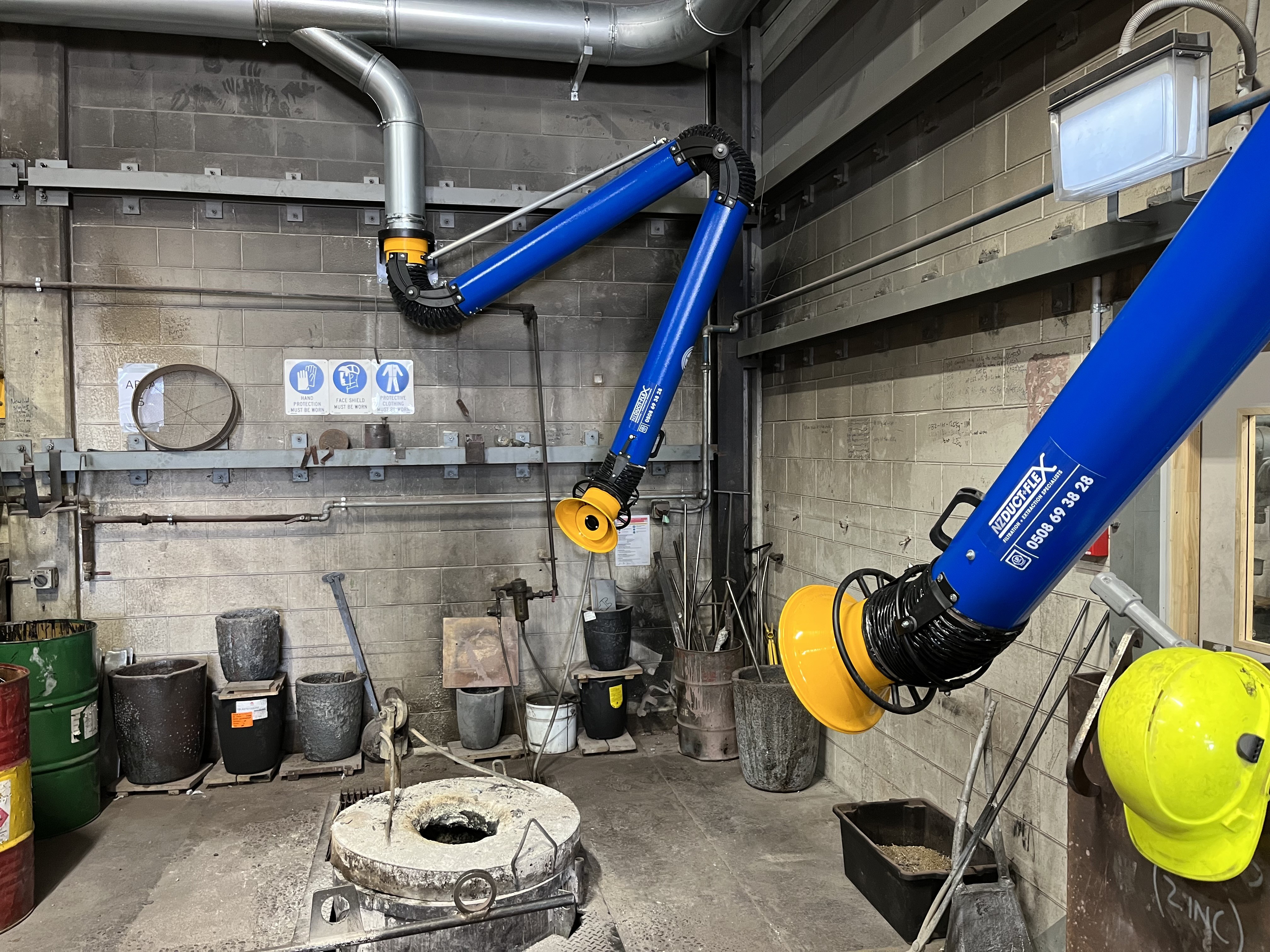
LEV ensures harmful fumes and dust are captured where the nuisance pollutants are being generated.
LEV: Fume Extraction for the Workplace
Extraction of fumes and/or dust from the immediate work area, to either be filtered first or simply released safely to atmosphere, is an important part of maintaining a safe and efficient working environment for your staff. This is LEV: Local Exhaust Ventilation.
WorkSafe NZ is New Zealand's primary health and safety regulator, responsible for improving workplace health and safety. WorkSafe will enforce regulations on their compliance visits and might issue an Improvement Notice, requiring immediate action, to ensure employee safety, and also to educate the employers on safe work practices. If the working environment is putting workers in immediate danger, they can, and do in fact, shut down your operation until remedial work has been completed to their satisfaction. Having a wide range of products already in stock in Auckland, means NZ DUCT+FLEX respond quickly to help you with your LEV compliance issues. WorkSafe works with businesses, workers, and other agencies to reduce harm and promote a culture of vigilance in the workplace.
Workplace Exposure Limits (WES) vary for different types of fumes and employers must ensure these are not exceeded. An example of a common solution to a fume/dust issue is fitting a few fans in the roof to expel the fumes. Or- just leave the shutter door open. Rampant all over NZ, both in heavily built up designated industrial areas as well as in more rural operations, this is a mistake: not a solution. While ceiling fans reduce the overall level of fumes inside the building, it still means the employee has breathed the fumes in and out before they are drawn upwards. This totally defeats the intention of assisting worker health and safety. Correct solutions remove fumes/dust prior to them coming into contact with the workers respiratory system! Use LEV!
Fume Extraction, one type of Local Exhaust Ventilation, is required in such processes as manufacturing (plasma, laser cutting, welding and soldering fume), vehicle servicing and repair, (exhaust fumes), paint, glass fibre, solvents, food processing, burning, heating, and laboratories.
Dust Extraction in any industry also uses LEV principles: deal with the dust issue as it is occurring for the simplest and cheapest solution.
WELDING, CHEMICAL AND DIESEL FUMES:
Welding fumes are a known carcinogen as are Diesel fumes generated by idling vehicles in enclosed service bays. Chemical fumes dissipated during laboratory procedures differ widely in the harm they can cause staff and proper extraction must be available and checked to be as efficient as the day the LEV system was first commissioned. Many solutions are available including for welding, the use of a fully sealed mask with respirator. This solution is only adequate if it fits perfectly, to seal the operators face.
See our Fume Arm range, Fume Mobile range, Vehicle Exhaust Reel systems and Rail Systems for possible solutions from NZ DUCT+FLEX: most items are available ex stock and suit single or multi bay operations.

FILTRATION OF FUMES:
Filtration of Fumes is not always necessary. Most vehicle exhaust can be captured then exhausted to atmosphere safely: it's the concentration of exhaust fumes that leads to Carbon Monoxide and other issues, (such as longer term lung disease), affecting employees. LEV solutions need to consider neigbouring buildings, especially if venting to atmosphere - usually this is via the roof using a stack.
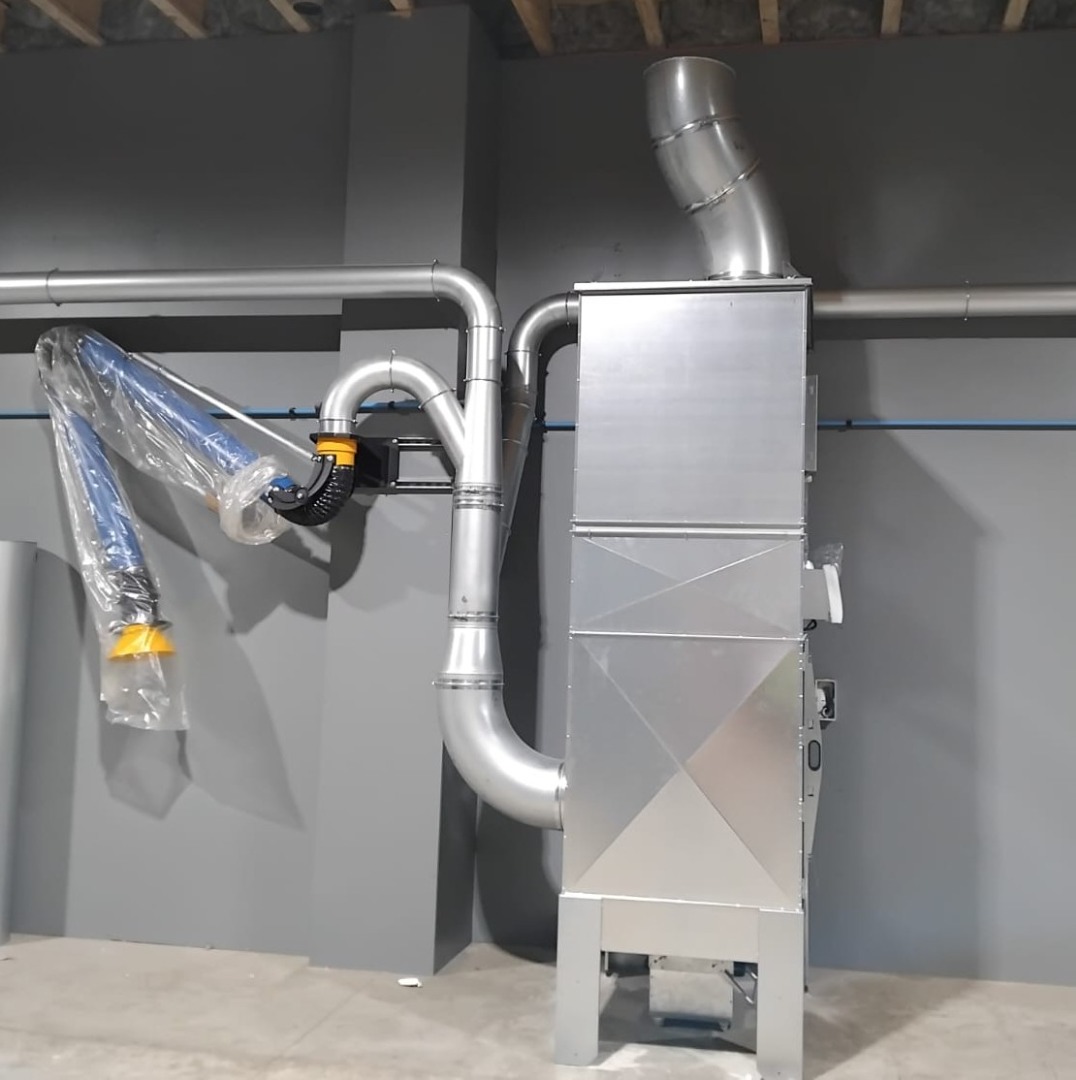
Our Compact Fume Filters are an ideal Local Exhaust Ventilation solution for smaller operations and are designed for inside or outside installations. To save space in the workshop, these are available with a top mounted fan option which includes an acoustic box for noise reduction. Larger manufacturers will need our DustStorm Fume Filters.
WHAT ABOUT GRINDING DUST?
If welding is combined with grinding, it's false economy not to filter the extracted metal dust/fume mix. Grinding dust expelled unfiltered onto metal roofs rusts them and can cumultively affect parked vehicles, (paintwork and glass) in the vicinity. If no LEV is available, allowing dust to fall back to ground level means any staff in the area will be breathing this in - whether they are associated with your production processes or not.
NZ DUCT can supply ex stock Grinding Benchs, to link to your filtration system), Welding Centres, (which include filtration). For smaller workshops a mobile DustKart will deal with the fumes and associated dusts from welding and grinding- returning air safely back to the work area with it's 3 stage filtration.
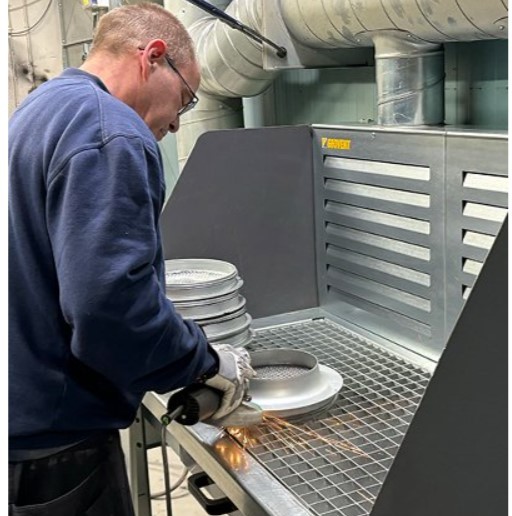
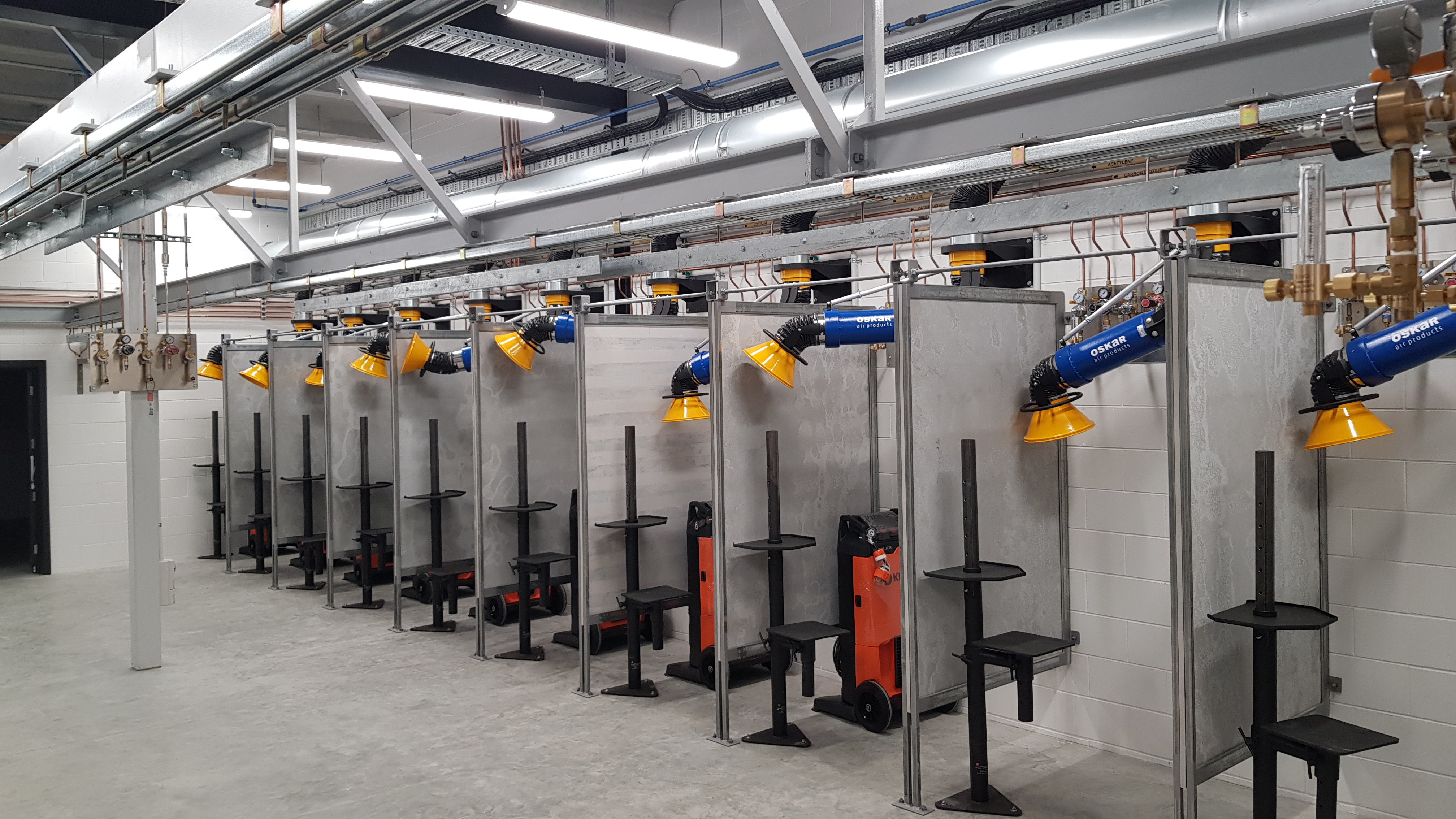
Tertiary colleges teaching welding skills ensure LEV is appropriately installed for individual booths - no chance for others to be affected by dangerous welding fumes.

Larger work areas cannot rely on central ceiling fans to protect staff: LEV must be available at every work station.
Understanding Local Exhaust Ventilation - LEV Systems NZ
Local exhaust ventilation (LEV) is a targeted engineering control that captures contaminants at or near their source before they can disperse into the workplace atmosphere. Unlike general ventilation systems that dilute airborne hazards across an entire space, an LEV system works by creating negative pressure zones at specific emission points, drawing dust, fumes, vapors, and gases directly into collection hoods or enclosures. This localized approach maximizes contaminant capture efficiency while minimising energy consumption, making LEV systems the preferred solution for industries dealing with welding fumes, grinding dust, chemical vapors, and other hazardous airborne materials. Properly designed local exhaust ventilation incorporates capture devices, ductwork, air cleaning equipment, and exhaust mechanisms working in concert to protect worker health.
Key Components of Effective LEV Systems
Successful LEV system performance depends on careful consideration of airflow velocity, hood design, and system balance to ensure adequate capture without excessive energy waste. The extraction hood must be positioned correctly relative to the contaminant source, with sufficient air velocity to overcome the momentum of particles or gases being released during industrial processes. Regular testing and maintenance of local exhaust ventilation equipment ensures continued performance, as dust accumulation in ductwork or filter degradation can compromise system effectiveness. Modern LEV systems help businesses maintain compliance with occupational exposure limits while protecting their workforce from respiratory hazards and long-term health effects associated with airborne contaminant exposure.
Need more information about Local Exhaust Ventilation systems, speak to one of our extraction experts today!